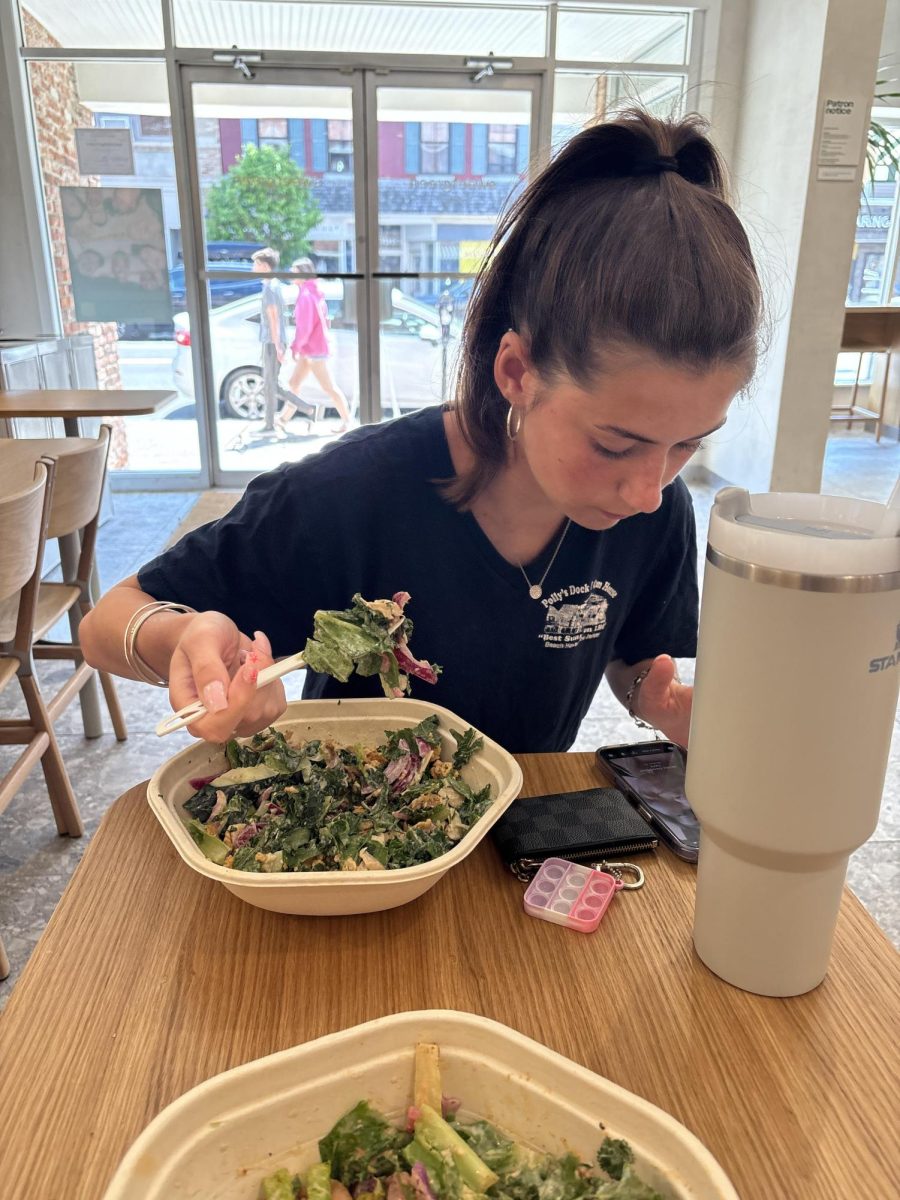
Imagine you finally get to sit down with your friends to eat a meal and relax, but by the time you get your food, you have less than 15 minutes to eat! This is a daily occurrence for students. They get into the cafeteria, grab their food, and go to buy it, and the line is insane. Many students will cut in line because they don’t want to wait. The line to pay for food can take over five minutes, even more if only one register is open. By the time students finally have their food and sit down to eat, they have 15-10 minutes left. That is not nearly enough time to get proper nutrition, eat all the food, and actually relax. Lunch time for students should be longer because short lunches cause students to rush through lunch, increase waste, and prevent students from getting proper nutrition.
To begin, short lunch periods cause students to waste their food. A survey was conducted to find out how much waste there was after lunch. According to the King County Green Schools Program, “Although children are being served fresher, healthier foods, the overflowing lunch waste at the end of school lunches suggests students do not have time to digest the healthier lunches served under the Healthy, Hunger-free Kids Act (Godoy & Aubrey, 2015). A study from Harvard School of Public Health shows that students with more time to eat lunch (at least 25 minutes versus 20 minutes) had ‘a 13% decrease in entrée waste, 12% decrease in vegetable waste, and 10% decrease in milk waste’ (Cohen, 2015)” (King County Green School Program). This illustrates how the shorter lunch length causes the amount of wasted food to increase, which is not good for the environment. When 20 students were polled, over half confirmed they wasted food because they didn’t have time to finish their lunch. As a result, lengthening the lunch period would result in a decrease in food waste.
Furthermore, the short lunch periods cause students to rush through eating their food. When students rush through eating, they don’t get proper nutrition. According to the King County Green Schools Program, “According to nutrition experts, 15 minutes or less is not enough time for children to properly eat and digest their food. When people have less time to eat or when they eat meals faster, calorie consumption increases” (King County Green Schools Program). This explains how short lunch periods are factually negative for children’s development and growth. In the same poll, over 20 students were asked if they felt they got proper nutrition at lunch; about 50% felt they didn’t have time to properly digest or consume the nutrients they needed to develop. Clearly, the short lunch period is not beneficial for students.
Although many people say that lengthening lunch would require classes to be shorter and decrease the amount of material that students can learn, a 40-minute class doesn’t mean the student is actually paying attention for 40 minutes. Students often experience something called a mid-day slump. Long lunches can act as a way to reset the brain. According to Juliana Cohen, a researcher for ScienceDirect, “Initiatives that increase lunch period lengths and physical activity opportunities have the potential to reduce students’ hunger levels and improve focus and behaviors in the classroom”(Cohen et al. 1695). This illustrates how a longer lunch time would increase the amount of time spent in class actually learning because the behavioral disruptions and lack of focus or concentration that are common in the afternoon would decrease. Clearly, a longer lunch would improve the quality of learning in classrooms despite the shorter seated time.
An alternative to forcing students to rush through lunch would be to extend the lunch period to one hour. With lunch being 30 minutes and recess being 30 minutes. This would provide ample time for students to buy lunch, finish their meal, and relax with their friends. While it would slightly shorten class periods, students would be able to focus better during the classes. Maybe we should prioritize the health of students, not just their intelligence.